
Portugal has a way of defying travel categories. It isn’t only a destination for history lovers, nor just a place for outdoor enthusiasts or slow-living seekers. Instead, it quietly weaves these elements together, allowing travelers to move between physical challenge, cultural depth, and restorative calm without ever feeling like they’ve changed trips. For readers of Spearstate, those drawn to experiences that build strength, perspective, and balance, Portugal offers a rare kind of cohesion.
As more travelers look for journeys that combine movement with meaning, interest in Portugal trips continues to grow. The country’s compact geography and regional diversity make it possible to hike coastal cliffs, explore centuries-old cities, and slow down in restorative settings within a single itinerary, all without constant relocation or logistical strain.
IMAGE ONE: https://unsplash.com/photos/brown-bridge-with-light-g3O3xWspoN4
A Landscape That Encourages Active Exploration
Portugal’s natural environment invites physical engagement without demanding extreme endurance. Its landscapes are varied but approachable, making adventure feel integrated rather than isolated. Along the Atlantic coast, cliffside paths and coastal trails provide opportunities for long walks, cycling, and surfing, often accompanied by expansive ocean views and steady sea air.
Inland regions introduce rolling hills, river valleys, and low mountain ranges where hiking feels exploratory rather than punishing. Trails are often well-marked and pass through working landscapes—vineyards, olive groves, cork forests—where human activity and nature coexist. This creates a form of adventure rooted in continuity rather than conquest, aligning physical movement with observation and awareness.
The Atlantic Coast as a Space for Movement and Reset
Portugal’s western edge is defined by the Atlantic, and that constant presence shapes both activity and atmosphere. Coastal towns and rural stretches alike encourage time outdoors, whether through walking, swimming, or simply following the shoreline at an unhurried pace.
Surf culture has long been part of Portugal’s coastal identity, but even for non-surfers, the ocean provides a sense of openness and rhythm. The sound of waves, shifting light, and changing weather patterns create a natural backdrop for resetting routines. For travelers focused on wellness, this environment supports both physical activity and mental clarity without requiring structured programs or retreats.
Cities Where History Feels Lived, Not Preserved
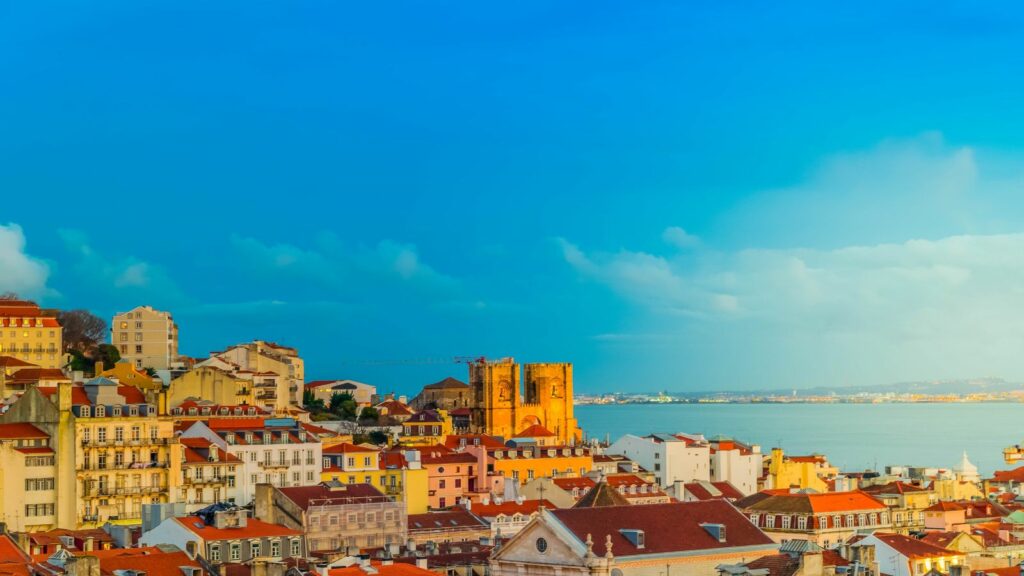
Portugal’s cities offer historical depth without the heaviness that can sometimes accompany heritage-focused destinations. In Lisbon, layers of history are visible in street layouts, architecture, and everyday movement. Trams climb steep hills that have carried people for generations, while viewpoints reveal how the city’s geography shaped its development.
Porto, further north, presents history on a more compact scale. Its riverfront, bridges, and narrow streets speak to centuries of trade and craftsmanship. Yet neither city feels frozen in time. Cafés, galleries, and contemporary design coexist naturally with older structures, reinforcing the idea that history here is part of daily life rather than a curated display.
IMAGE TWO: https://unsplash.com/photos/a-group-of-boats-floating-on-top-of-a-body-of-water-2RGSBgIrJCE
Walking as a Way of Understanding Place
One of the simplest ways Portugal balances adventure and history is through walkability. Many towns and cities are best explored on foot, encouraging slow movement and repeated observation. This physical engagement deepens understanding, turning sightseeing into something more experiential.
Walking through an old neighborhood, you feel the incline of streets, the worn stone underfoot, and the way light moves through narrow passages. These sensory details create a stronger connection to place than passive observation ever could. For travelers who value embodied experience, this form of exploration bridges the gap between activity and reflection.
Wellness Without Isolation
Wellness in Portugal rarely feels separated from everyday life. Instead of being confined to designated spaces, it emerges through rhythm, environment, and habit. Long lunches, evening walks, and time spent outdoors are normalized rather than treated as indulgences.
Thermal baths in certain regions reflect this integrated approach to well-being. Historically used for both social and restorative purposes, these spaces highlight how wellness has long been woven into community life. Even without formal spa visits, Portugal’s emphasis on balance—between work and rest, activity and stillness—creates conditions that support recovery and mental clarity.
Food as Sustenance, Not Performance
Portuguese cuisine reinforces this balance. Meals are designed to nourish rather than impress, relying on fresh ingredients and straightforward preparation. Grilled fish, vegetable soups, rice dishes, and bread-based meals provide energy without heaviness, supporting active days without demanding culinary focus.
Eating is unhurried and social, encouraging conversation and presence. For travelers, this approach aligns well with wellness-focused travel, where food supports the journey rather than becoming the main event. Markets and small restaurants offer insight into regional variation without overwhelming choice or excess.
Rural Regions and the Power of Slowing Down
Beyond cities and coastlines, Portugal’s rural regions provide space for recalibration. Areas such as the Alentejo are defined by open landscapes, low population density, and a pace that resists urgency. Days unfold according to light, weather, and routine rather than schedules.
This environment offers a different kind of wellness—one based on simplicity and continuity. Walking through quiet villages, observing agricultural rhythms, or sitting outdoors for extended periods encourages reflection. For travelers accustomed to constant stimulation, these moments of stillness can be as restorative as physical exertion.
IMAGE THREE: https://unsplash.com/photos/a-house-on-a-hill-with-a-tree-in-the-foreground-se9oknY7GKQ
History as Context, Not Obligation
Portugal’s long history adds depth without demanding constant attention. Castles, monasteries, and old town walls are present, but they don’t require exhaustive interpretation to be appreciated. Their value often lies in context rather than detail—how they sit within the landscape, how they were used, and how they continue to shape movement and settlement.
This allows travelers to engage with history on their own terms. Some may dive deeper into specific periods or sites, while others simply absorb atmosphere. Either approach feels valid, reinforcing Portugal’s flexibility as a destination.
Climate That Supports Balance
Portugal’s climate plays a significant role in its ability to blend adventure and wellness. Mild winters and long shoulder seasons make outdoor activity possible for much of the year. Coastal breezes moderate summer heat, while inland regions offer seasonal variation without extremes.
This predictability reduces physical stress and planning anxiety, allowing travelers to focus on experience rather than adaptation. Comfortable conditions encourage time outside, which naturally supports both physical and mental well-being.
Travel That Feels Coherent
What ultimately sets Portugal apart is how naturally its elements connect. Adventure doesn’t require leaving cultural centers behind. Wellness doesn’t demand withdrawal from daily life. History doesn’t overwhelm the present.
Distances between regions are short enough to avoid exhaustion, yet varied enough to prevent monotony. This coherence makes Portugal especially appealing for travelers who want depth without fragmentation—a journey that feels intentional rather than assembled.
Why Portugal Works as a Complete Experience
Portugal succeeds because it doesn’t ask travelers to choose between effort and ease, or between engagement and recovery. It supports movement through landscapes that invite activity, offers history that enriches without burdening, and provides an atmosphere that encourages rest without stagnation.
For readers of Spearstate.com seeking trips that build resilience, perspective, and balance, Portugal offers a rare alignment. It is a place where physical challenge sharpens awareness, history provides grounding, and wellness emerges not as a goal, but as a natural outcome of how the journey unfolds.