
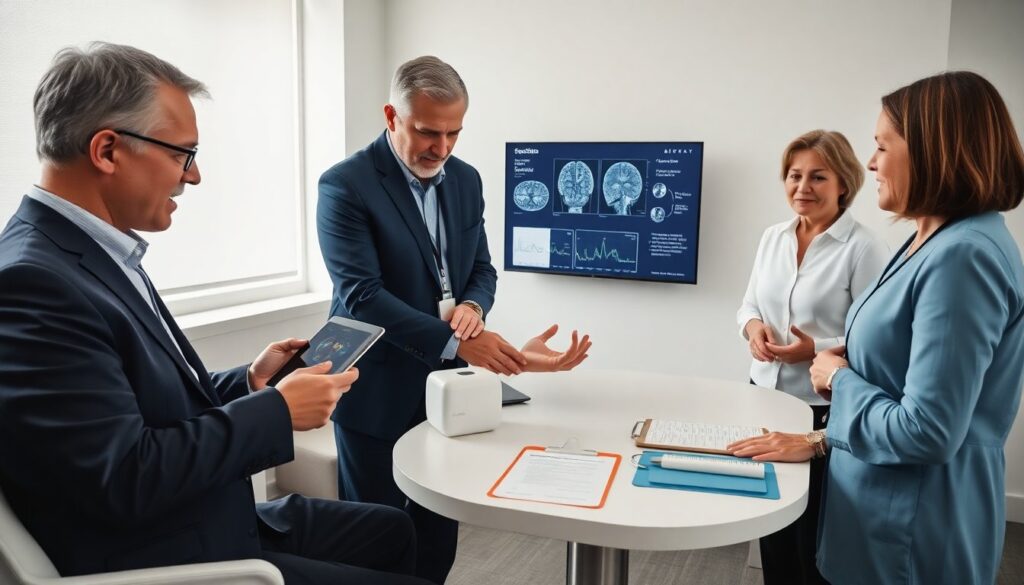
SpearState treatment care tremor journey embrace appears early in many patient plans. This guide explains what SpearState offers, who may benefit, and what steps follow. It sets clear expectations for assessment, treatment, and daily care. It aims to help readers make informed choices and to set realistic goals before treatment begins.
Key Takeaways
- SpearState treatment is a specialized program designed to reduce persistent tremors and enhance daily function for patients with essential tremor and certain Parkinsonian tremors.
- Before starting SpearState treatment, clinicians conduct thorough medical assessments and set clear, measurable goals with patients and their families to ensure realistic expectations.
- The treatment involves image-guided, monitored sessions tailored to patient response, balancing benefits with minimal side effects.
- Post-treatment care includes rehabilitation exercises, occupational therapy, and regular follow-up visits to monitor progress and adjust therapies as needed.
- Long-term management emphasizes patient-centered support, including community resources, periodic reassessment, and adapting care plans to maintain function and quality of life.
What Is SpearState Treatment And Who It Helps
SpearState treatment care tremor journey embrace refers to a targeted program for people with persistent tremor. Clinicians design the program to reduce tremor, improve function, and lower daily stress. Neurologists evaluate tremor type, severity, and medical history. Patients with essential tremor, some forms of Parkinsonian tremor, or medication-resistant tremor may qualify. The team discusses risks, benefits, and likely outcomes. Families join the discussion to set care priorities. The program mixes device therapy, focused therapy sessions, and ongoing monitoring. Providers measure task performance and quality of life to judge benefit.
Preparing For Treatment: Medical Assessment And Goal Setting
Clinicians collect medical records, imaging, and medication lists. They perform a focused neurologic exam and standardized tremor scales. The team orders tests to rule out reversible causes. They review current treatments and adjust medications if needed. Care teams set clear, measurable goals with the patient and family. Goals may include fewer spills, steadier handwriting, or safer dressing. The team records baseline measures for later comparison. They assign a care coordinator to schedule visits and answer questions. The team explains expected timelines, follow-up visits, and possible complications in plain terms.
The Treatment Experience: Step‑By‑Step What To Expect
On treatment day the team confirms identity and reviews the plan. Staff explain each step and obtain consent. The procedure environment aims to reduce stress and noise. Providers use image guidance and monitoring tools to target tremor sources. The team pauses to check comfort and response. Sessions may last from one hour to several hours depending on method. Clinicians test tremor response during the session and adapt parameters. They record real-time results and adjust settings to balance benefit and side effects. After the session the patient moves to a recovery area for monitoring.
Recovery, Rehabilitation, And Daily Care After SpearState
Clinicians give clear discharge instructions and a recovery timeline. Patients receive guidance on wound care, activity limits, and medication changes. Therapists teach exercises to strengthen control and to improve fine motor skills. Occupational therapists train patients on adaptive techniques for eating, dressing, and writing. Care teams schedule follow-up visits to track progress and to repeat measures. Patients log daily activities and symptom changes to share at visits. Families support practice of therapy tasks and encourage steady progress. The care team adjusts therapy and medications based on measured outcomes.
Long‑Term Coping, Community Resources, And When To Reassess
Patients join peer groups to share tips and to reduce isolation. Clinicians connect patients to local services for home safety and adaptive equipment. Patients learn pacing strategies to conserve energy and to reduce frustration. Providers recommend yearly reassessment or sooner if symptoms change. Clinicians review medication lists and device settings at follow-up. The team measures function with the same scales used at baseline to track benefit. Patients and families plan future goals and adjust daily routines as needed. If tremor returns or if function declines, clinicians discuss repeat treatment or alternative therapies. The care approach stays practical, measurable, and patient-centered.